
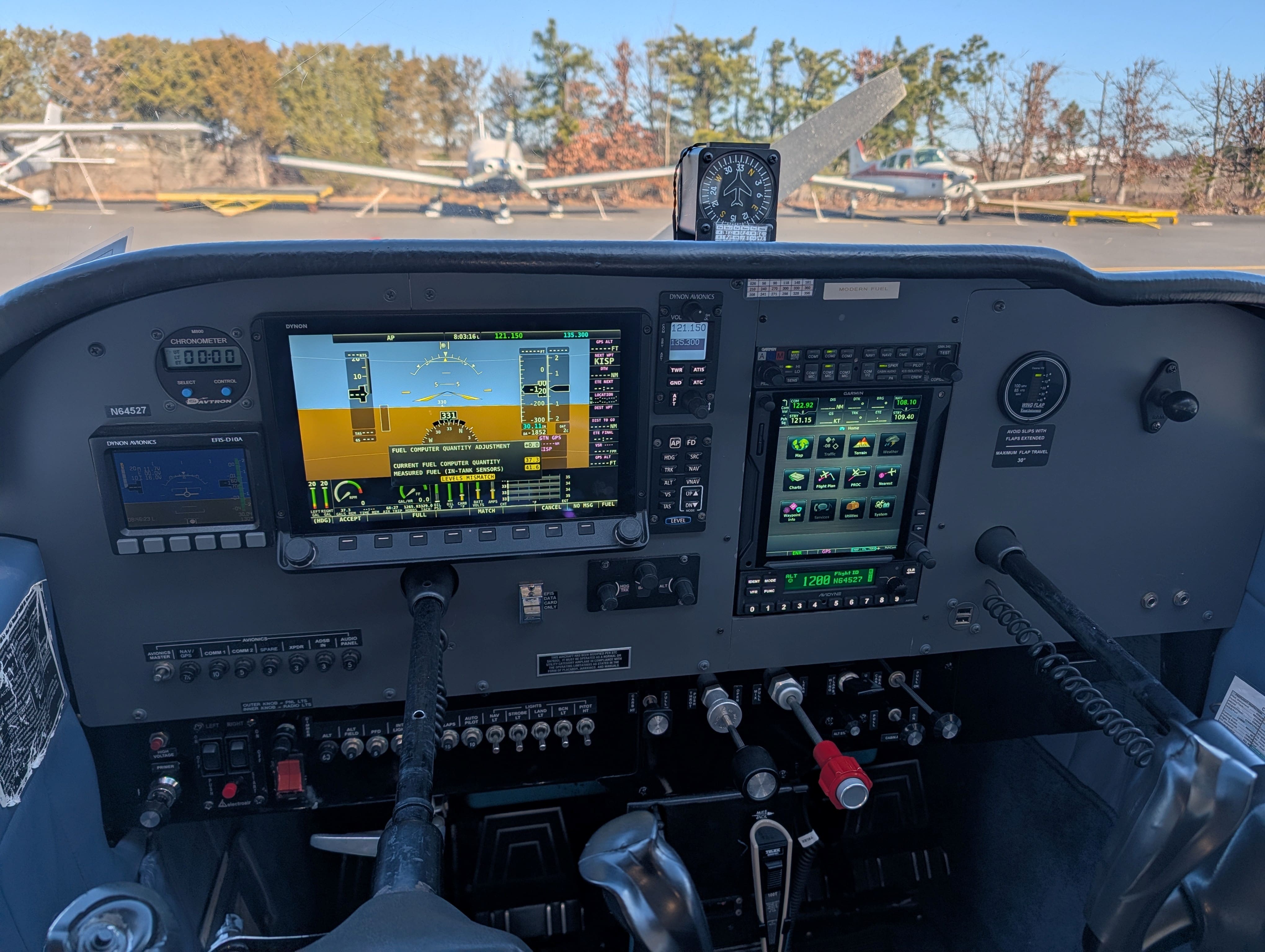
If you have started looking into flight training, you have probably seen wildly different answers to this question — anywhere from "a couple of months" to "a couple of years." Both can be true, and that is exactly why the honest answer matters. Your private pilot license timeline is driven less by how naturally talented you are and more by one practical thing: how often you get in the airplane. Here is the real picture, the way we explain it to students who walk in the door at Republic Airport.
The honest answer: it depends on how often you fly
There is no fixed calendar for a private pilot license, and anyone who promises you an exact date is guessing. The single biggest factor is frequency. A student flying two to three times a week builds and keeps momentum, so each lesson moves forward instead of re-covering old ground. A student flying once every two weeks spends part of every lesson knocking the rust off the last one. Same person, same ability — very different finish line. So when you ask how long it takes, the real question underneath it is how much you can fly.
FAA minimum hours vs. reality
The FAA sets a minimum of 40 flight hours for the private pilot certificate under Part 61. That number gets quoted a lot, but it is a floor, not an average. In practice, very few people finish at exactly 40 hours. Most students complete their training somewhere closer to 60 to 70 hours by the time they are truly ready for the checkride. That is not a sign anything is wrong — it reflects how the rating actually comes together: solo work, cross-country flights, night flying, maneuvers polished to standard, and the judgment that only builds with time in the airplane. Budget around the realistic number, not the minimum, and you will not be caught off guard.
The realistic timeline
Put the hours and the frequency together and a clear pattern shows up. Flying two to three times a week, most students reach checkride readiness in roughly six to nine months. That window covers the full arc — early lessons, your first solo, the cross-country phase, the written knowledge test, and the final polish before the practical exam. Some move a little faster, some take a little longer, and weather and scheduling always play a role. But six to nine months at a steady two-to-three-flights-a-week pace is the timeline we see most often, and it is the one worth planning your life around.
What stretches it out
The thing that quietly adds months is inconsistency. Flying once a week, or worse, taking long gaps between lessons, is the most common reason training drags on. Skills decay between flights, and when too much time passes you spend the first part of each lesson recovering ground you already covered. A few culprits show up again and again:
- Flying once a week or less. The slower cadence means more re-learning and fewer net gains per lesson.
- Long gaps. A two- or three-week break between flights resets more than people expect.
- Weather. Cancelled lessons are part of flying, especially in the Northeast — they are easier to absorb when your baseline schedule is two or three flights a week.
- Life getting in the way. Work, travel, and family pull at your calendar. That is normal — the key is protecting the cadence when you can.
None of these are dealbreakers. They are just the levers that decide whether your timeline lands at six months or eighteen.
The weekend-only reality
Plenty of our students work full time and can only fly on weekends, and the honest read is this: it works, it is just slower. Two weekend flights a week keeps you firmly in the realistic range. One flight most weekends still gets you there — it simply takes longer, and you have to work harder to hold onto what you learned. The way weekend students keep momentum is by doing the ground work in between. Studying for the written test, reviewing maneuvers, and chair-flying procedures at home all mean that when you do get to the airport, the lesson is about flying rather than remembering. Ground study is the lever weekend-only students control completely, and it is the difference between steady progress and spinning your wheels.
How to finish faster
If you want to compress your timeline, the playbook is simple and it is mostly within your control:
- Be consistent. Two to three flights a week, protected on your calendar, beats five flights one week and none the next.
- Run ground school in parallel. Knock out the written knowledge test early instead of letting it become a roadblock near the end.
- Treat it like a commitment. Students who block the time and show up prepared finish faster and, because they fly fewer total hours, spend less overall.
Consistency is not just the fastest route — it is the cheapest one, because hours and dollars track together. You can read how we structure the path on the private pilot program page, and we will always give you a straight answer about what your specific schedule means for your timeline.
Brand new to flying? Start with a discovery flight over Long Island → or read more about our Long Island flight school →