Plenty of pilots get their certificate at a quiet, uncontrolled field and never speak to a controller until well after their checkride. Then they show up to a busy airport, a charter operator, or an airline interview and have to learn radio work and traffic management under pressure. Training at a towered airport flips that. At Republic Airport here on Long Island, you build those skills from your first lesson — not as a special exercise, but as the normal way you fly. By the time you reach a checkride, the radio is second nature instead of a source of nerves.
Towered vs non-towered airports
Most small airports in the country are non-towered. There is no controller; pilots self-announce their position on a shared frequency and work out sequencing among themselves. It is a perfectly good way to fly, and every well-rounded pilot should be comfortable doing it. But it asks less of you on the radio, and it never puts you in a structured clearance environment.
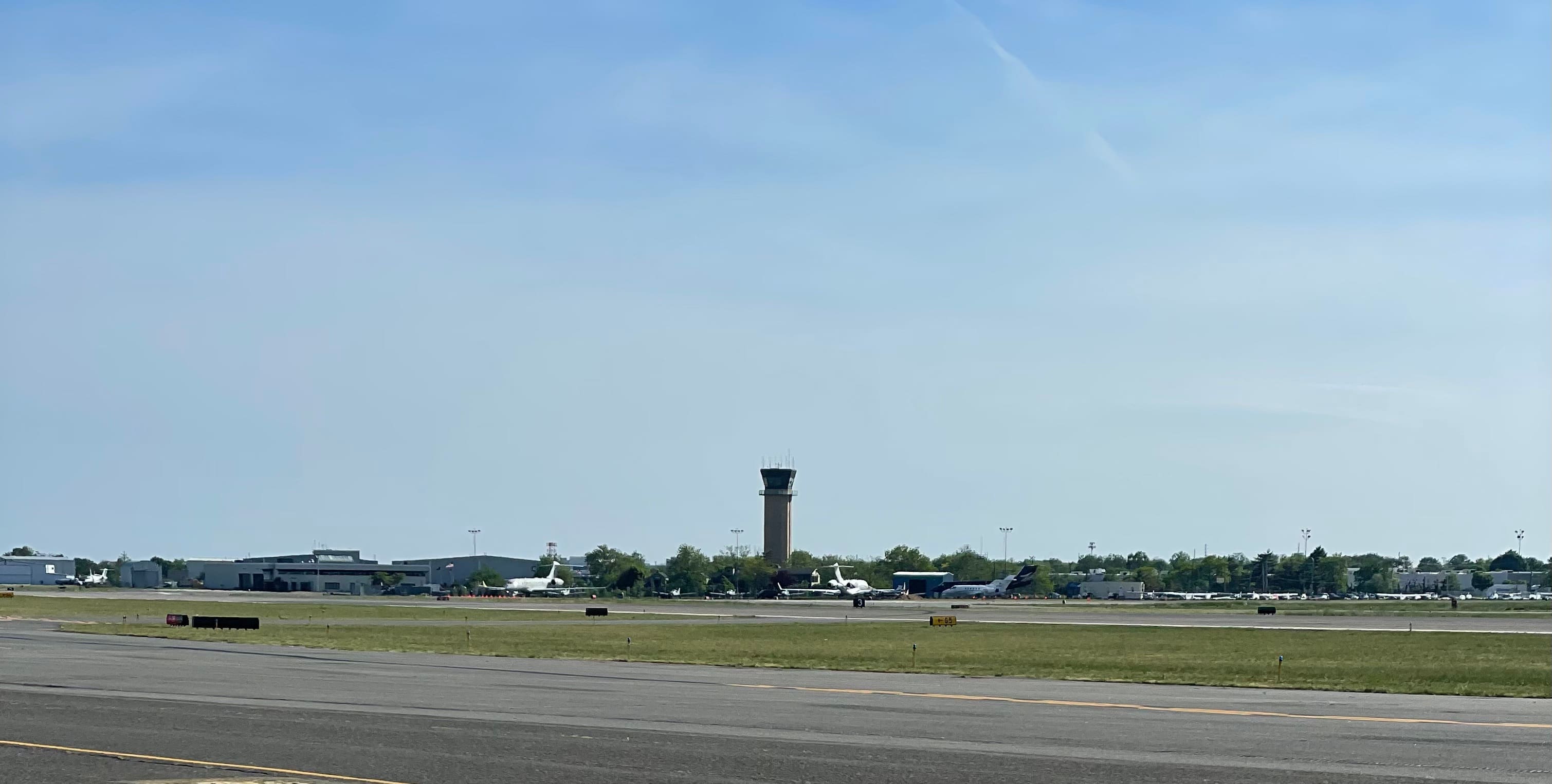
A towered airport has an active control tower staffed by air traffic controllers who issue instructions and clearances. Republic is a Class D airport, which means a controller manages all traffic taking off, landing, and operating in the airport's airspace. To fly here, you talk to the tower, you receive clearances, and you follow instructions. For a student, that is not a hurdle — it is daily, repeated practice in exactly the environment professional flying happens in.
What you learn at a towered field from day one
The difference shows up in the first few hours of training. At a controlled field, your everyday flying includes:
- Real radio communication. You request taxi, takeoff, and landing clearances and talk to ground and tower on every flight. The phraseology that intimidates so many pilots becomes ordinary because you use it constantly.
- Readbacks done right. Controllers expect you to read back clearances and instructions correctly. You learn to listen precisely, confirm what you heard, and catch your own mistakes — a habit that carries into every cockpit you will ever sit in.
- Following clearances. Hold short here, line up and wait, cleared for takeoff, make right traffic. You learn to take an instruction, understand it, and fly it accurately.
- Sequencing in real traffic. You are slotted into a flow with other aircraft — extending a downwind, adjusting your approach, following the airplane ahead. Managing your spacing in live traffic is a skill you cannot fake, and here you practice it every time you fly.
The New York Class B is right next door
Republic does not just have a tower — it sits on the edge of one of the most complex airspace structures in the country. The New York Class B airspace, built around the major airports to our west, is dense, layered, and busy. Learning to navigate near it is the kind of experience many pilots spend years trying to find.
For cross-country training, that adjacency is a real advantage. Planning a route out of KFRG means understanding airspace boundaries, transition routes, and how to talk to the right facility at the right time. You learn to read complex airspace on a chart and then fly it for real, with help from your instructor. Those are rare, durable skills — and you build them as a normal part of training rather than chasing them down later.
Being honest about congestion
Here is the straight version: Republic gets busy. On a clear weekend afternoon you may hold for a takeoff clearance, wait for a gap in traffic, or get sequenced behind several other aircraft. A quieter field would get you airborne faster on those days. That is a fair trade-off, and we will not pretend otherwise.
What matters is what you do with that time. At Aspire, hold time is not wasted time. While you wait, your instructor uses it for something useful — reviewing the radio calls you just made or are about to make, talking through the airspace around you, or practicing a weather briefing for the flight. A few minutes holding short becomes a few minutes of learning you would not get at an empty airport. Over a full training program, that adds up.
Why this matters for career-bound pilots
If you are training toward a professional flying career, the skills a towered airport builds are exactly the ones employers expect you to already have. Charter operators, corporate flight departments, and airlines all operate in busy, controlled, high-traffic environments. Confident radio work, accurate readbacks, comfort flying clearances, and the judgment to manage yourself in dense airspace are not extras at that level — they are the baseline.
Many pilots only meet these demands after their checkride and have to build the habits the hard way, on the job. Training at Republic builds them in from the start, so you arrive at each new stage of your career already fluent in the environment. That is the quiet advantage of learning here, and it follows you for the rest of your flying.
Ready to get in the air? Book a discovery flight over Long Island → or read more about our Long Island flight school →