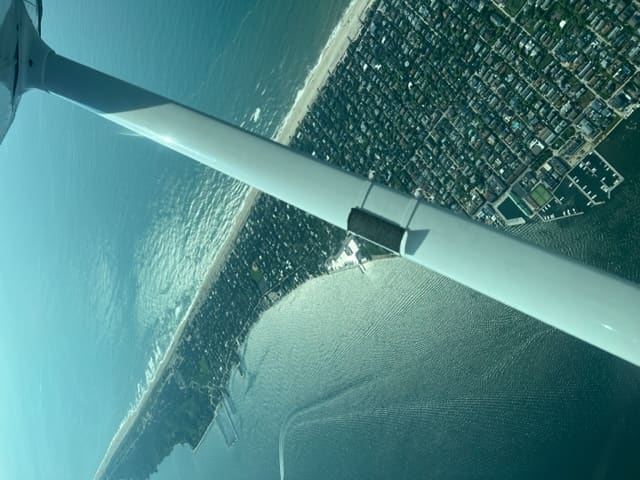
If you grew up on Long Island and wanted to work in aviation, you may have noticed the region punches well above its weight. Long Island built thousands of warplanes, and today Nassau and Suffolk still hold one of the densest concentrations of aviation education in the country: flight schools at several public airports, an aviation-focused college at Republic Airport itself, and a steady pipeline of pilots, dispatchers, and maintainers feeding the New York airspace. But that density makes the search confusing, because "aviation school" is a label applied to very different things. This guide sorts them out — what each type of school is, where each sits on Long Island, and which one fits which goal.
First, a distinction: aviation school vs flight school
People use the terms interchangeably, but they are not the same thing. A flight school teaches you to fly — private pilot certificate, instrument rating, commercial certificate, CFI. A aviation school in the broader sense covers the whole industry: aircraft maintenance (A&P / Part 147 programs), aircraft dispatch, air traffic control-adjacent programs, and aviation management degrees, alongside flight training. If your goal is a cockpit seat, you want a flight school or a college flight program. If your goal is a different corner of aviation — turning wrenches, managing operations, dispatching — you want one of the broader programs. Both are real careers, and Long Island has both; knowing which you mean is the first cut in choosing.
The five types of aviation school
- Part 61 flight schools. The most common type on Long Island. Training to the same FAA standards as anywhere else, but with flexibility on sequence and pace — you fly when your schedule allows, and pay as you go. The private certificate requires a 40-hour minimum (35 for Part 141). Best for hobbyists, career changers, and anyone balancing training against a full-time job.
- Part 141 approved schools. FAA-approved curricula with fixed syllabi, stage checks, and lower minimum hours in exchange for structure. Meant for full-time career-track students. If you are training on VA benefits, Part 141 approval is usually what makes those funds usable.
- Aviation colleges and universities. Degree programs that bundle flight training with a two- or four-year degree. Long Island's flagship is SUNY Farmingdale's aviation program, sitting right at Republic Airport (KFRG), with Vaughn College just over the line in Queens. A degree plus flight training costs more than either alone, but the college pathway can lead to a restricted privileges airline transport certificate (R-ATP) at 1,000 flight hours instead of the standard 1,500 — a genuine head start toward the airlines.
- ATP career pilot programs. Nationally advertised fast-track programs that push students from zero to commercial certificates and instructor ratings on an intensive timeline. The good ones deliver structure and pace; the tradeoffs are higher cost, less scheduling flexibility, and a compressed experience that leaves little room for the kinds of flying that make you a better pilot along the way.
- Type-specific training centers. A newer addition — centers focused on a single aircraft type, notably Cirrus airframe training. If your goal is to own or rent one specific airframe, type-specific transition training makes sense; for ab-initio training, a standard trainer like the Cessna 172 remains the sensible starting point.
Where each one lives on Long Island
Geographically, aviation education on Long Island clusters around three airports:
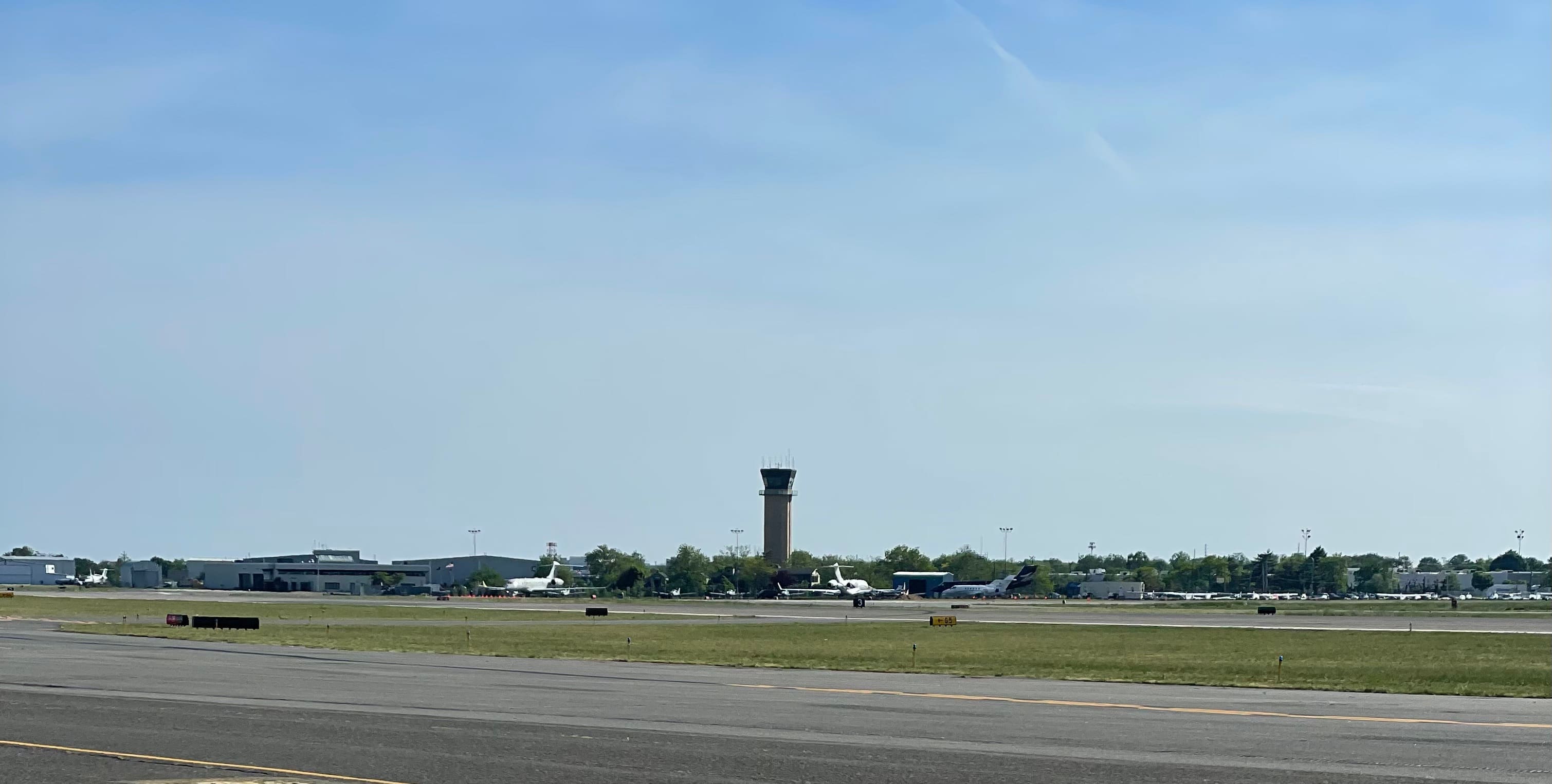
- Republic Airport (KFRG), Farmingdale. The center of gravity for flight training in the region. KFRG hosts most of Long Island's flight schools plus SUNY Farmingdale's aviation campus, all operating out of a towered Class D airport with two runways and controllers who see student traffic all day. If you live in Nassau or western Suffolk, this is almost certainly where your training happens.
- MacArthur Airport (ISP), Ronkonkoma. The east-end hub. Flight schools operate out of ISP and its neighboring fields — Heritage Flight Academy is the name most Long Islanders know — giving Suffolk residents a closer option than driving west to Farmingdale.
- Brookhaven Airport (WSHW), Shirley. The quiet, untowered option on the east end. Non-towered training environments teach a different skill set — CTAF radio calls instead of tower clearances — and the proximity to the south shore practice areas keeps lesson time efficient.
For a deeper comparison of the schools at Republic Airport specifically — fleet, pricing, philosophy — we have written an honest Republic Airport flight schools guide that names where we win and where we do not.
Choosing based on your actual goal
The right school depends on what you want, and it is worth being honest about it before you shop:
- Hobby flyer. You want to fly yourself, friends, and family around the Northeast. Part 61 is built for you — pay-as-you-go, train around your life, finish at your pace. The private certificate is a lifetime license, and you can add ratings later as curiosity dictates.
- Career pilot on a timeline. You want an airline or charter cockpit. The question is whether you want a degree. If yes, the college route (SUNY Farmingdale, Vaughn) pairs flight training with the R-ATP pathway. If no, a structured Part 61 or Part 141 track through commercial and CFI, then two to three years instructing to reach ATP minimums, is the standard route. Our guide to becoming a pilot in New York covers the full certificate ladder.
- Full-time vs part-time. A Part 141 or ATP-style program assumes you show up daily. A Part 61 school works around a job — but be realistic: two lessons a week beats an ambitious plan you cannot keep. Consistency, not intensity, finishes certificates.
- Budget. Flight training at Long Island rates runs $18,000–$20,000 for a private certificate flown realistically (60–70 hours), and more for each rating above it. College aviation runs far higher once tuition is counted, though financial aid and VA benefits can offset it. Our cost breakdown has the numbers per certificate.
If the Part 61 vs Part 141 decision is the piece you keep going back and forth on, we have a full comparison of the two training paths worth a read.
What "aviation school" leaves out
One more honest note. The broad label hides the fact that aviation careers exist that no flight school will mention, because they are not in the business of teaching them. Aircraft maintenance (the A&P certificate) is in chronic national shortage, dispatch is a desk career that pays well, and airport and airline management is its own discipline. Long Island students who want those careers look at the maintenance and aviation management tracks in the college programs rather than flight schools — and they are right to. But if what you want is the left seat of an airplane, you can skip the broad label entirely: you are looking for a flight school, and the next section is about finding a good one on Long Island.
Where Aspire fits
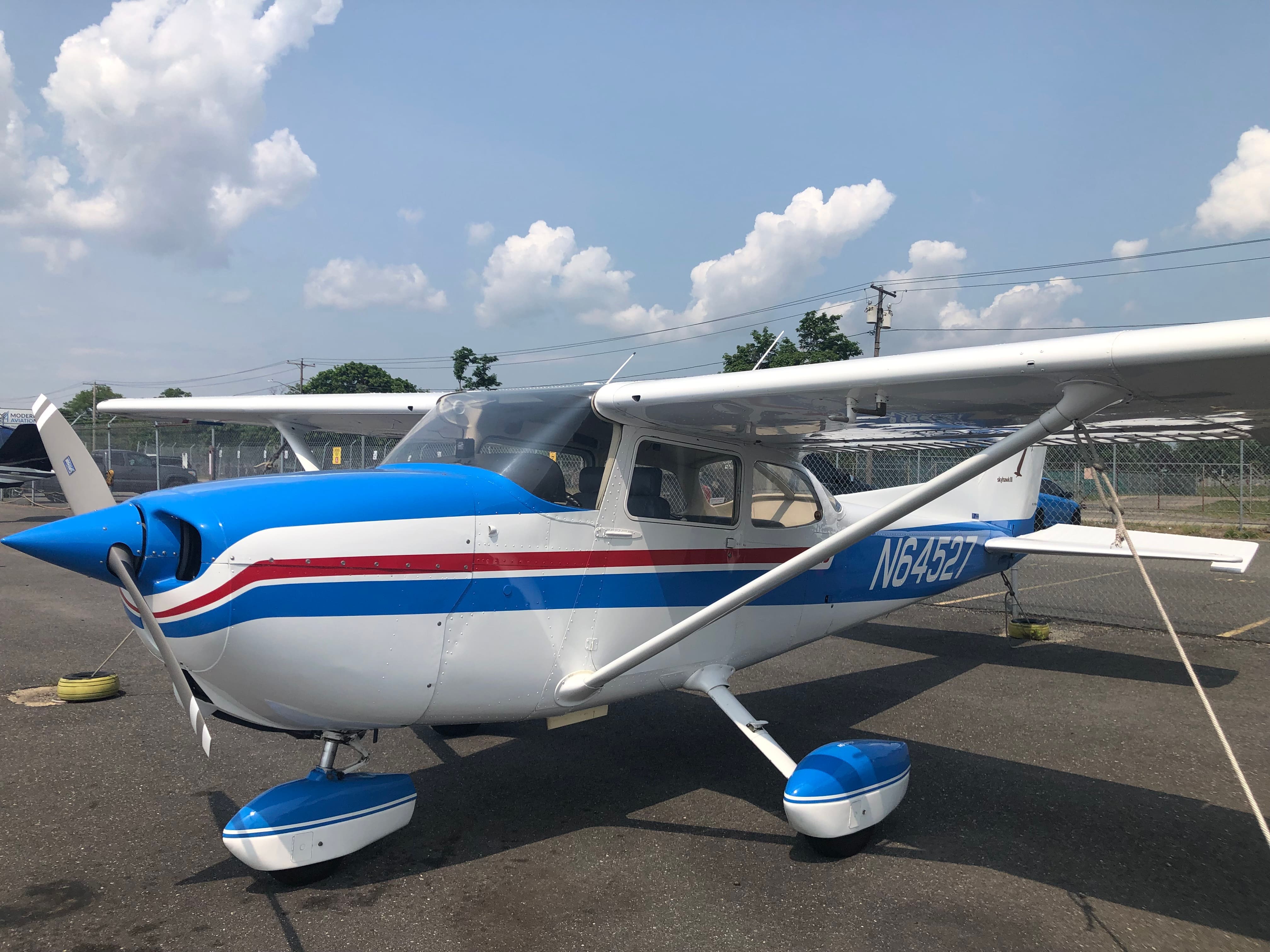
We are a family-owned Part 61 flight school at Republic Airport — one of the pins on the KFRG map, training private through CFI/CFII students in a six-aircraft Cessna 172 fleet. Part 61 flexibility is our whole model: we work around your schedule rather than the other way around. If your goal is a career, our training programs page lays out the certificate ladder stage by stage; if you are still testing the water, a discovery flight is the cheapest way to find out whether aviation school in any form is for you.
Keep reading: how to become a pilot in New York →, Republic Airport flight schools compared →, or learn about training with Aspire on Long Island →