
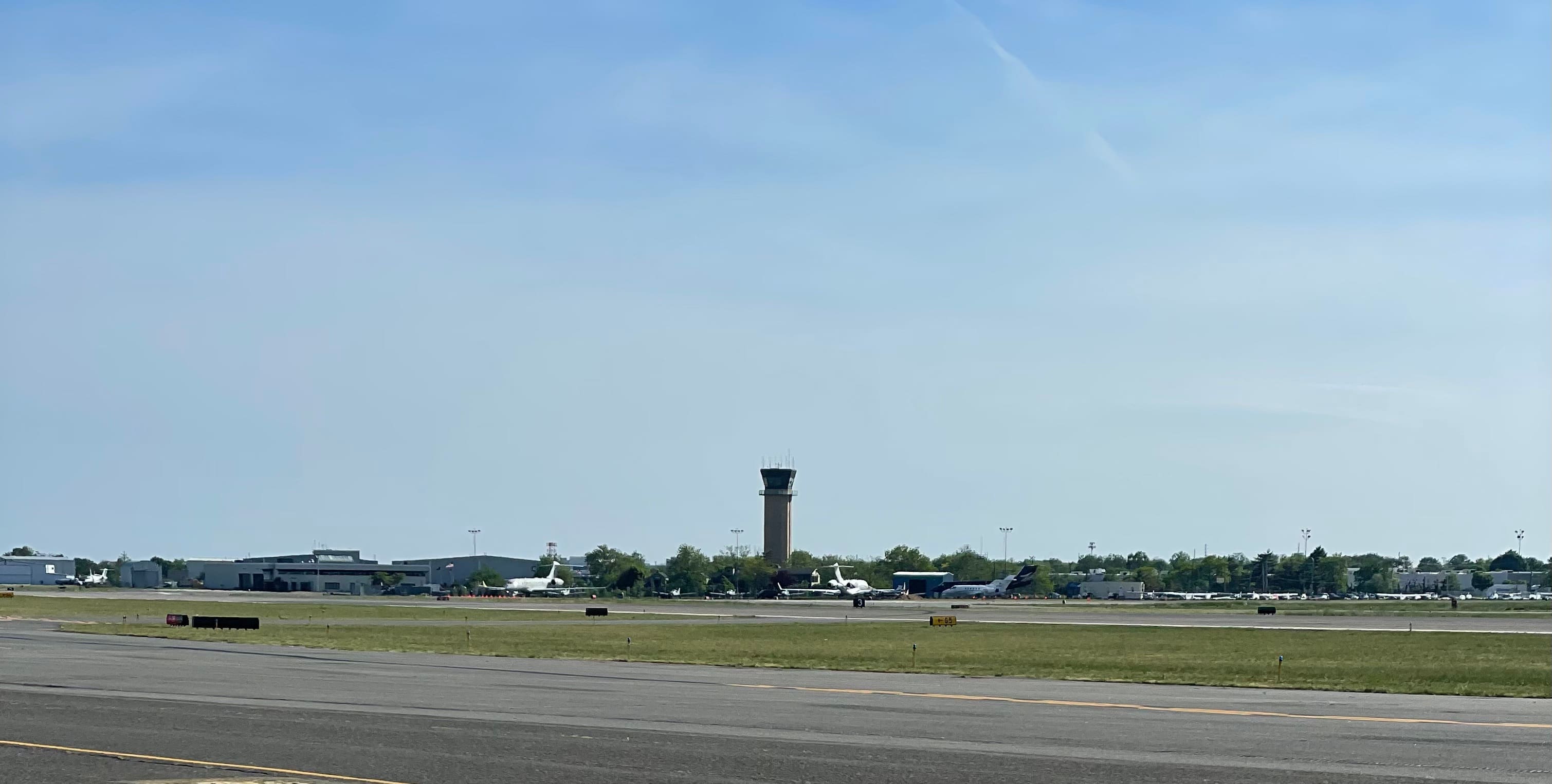
Almost everyone who starts flight training on Long Island begins the same way: typing "flight school near me" into a search bar and staring at a map. If you live anywhere in Nassau or Suffolk County, that map points overwhelmingly at one place — Farmingdale, and Republic Airport (KFRG) in particular. KFRG has more flight schools than anywhere else in the region, which is good news and bad news. Good, because you have real choices. Bad, because "near" is the least important part of the decision. The school that is fifteen minutes from your house with one tired trainer and a three-week wait for a CFI will cost you more, in the end, than the one that keeps you flying twice a week. Here is how to sort the pins on the map.
Why location still matters — just not the way you think
Proximity does matter, but for one specific reason: consistency. Flight training is a skill that decays between lessons, and the students who finish near the FAA minimums are almost always the ones flying two to three times a week. A school that is close enough to reach after work or on a Saturday morning is a school you will actually show up to. That is the real value of training near Farmingdale — not drive time for its own sake, but the fact that a convenient airport makes a consistent schedule possible, and a consistent schedule is the single biggest lever on your total cost. If a school is a hike to get to, be honest with yourself about whether you will fly often enough for it to pay off.
What to look for in a flight school
Whether you are after a private pilot license (PPL) or the full ladder through commercial, the fundamentals of a good school are the same. Here is the checklist worth running through before you hand anyone money:
- Fleet size and availability. One aircraft means one maintenance day shuts the whole operation down — and a 100-hour inspection can ground your training for a week or more. Ask how many trainers the school runs and how far out the schedule books. A school with a handful of Cessna 172s absorbs maintenance and busy weekends; a one-airplane school cannot.
- Instructor quality and availability. A good certified flight instructor (CFI) is the difference between 60 hours to checkride and 85. Ask how many CFIs are on staff, what their average tenure is, and whether you can stay with the same instructor. Constant instructor churn means constantly re-establishing where you are in the syllabus.
- Scheduling flexibility. If you work full-time, weekend-only availability stretches a certificate that takes six months into one that takes eighteen. Ask for the online scheduling system by name and look at the actual availability before you commit.
- Part 61 vs Part 141. Part 61 schools train to the same FAA standards with more flexibility on sequence and pace — better for people with jobs and unpredictable schedules. Part 141 schools follow a fixed, FAA-approved curriculum with lower minimum hours (35 instead of 40 for the private), which suits full-time career students. Most Long Island hobby and career-track students are well served by Part 61 flexibility; either path leads to the same checkride with the same DPE.
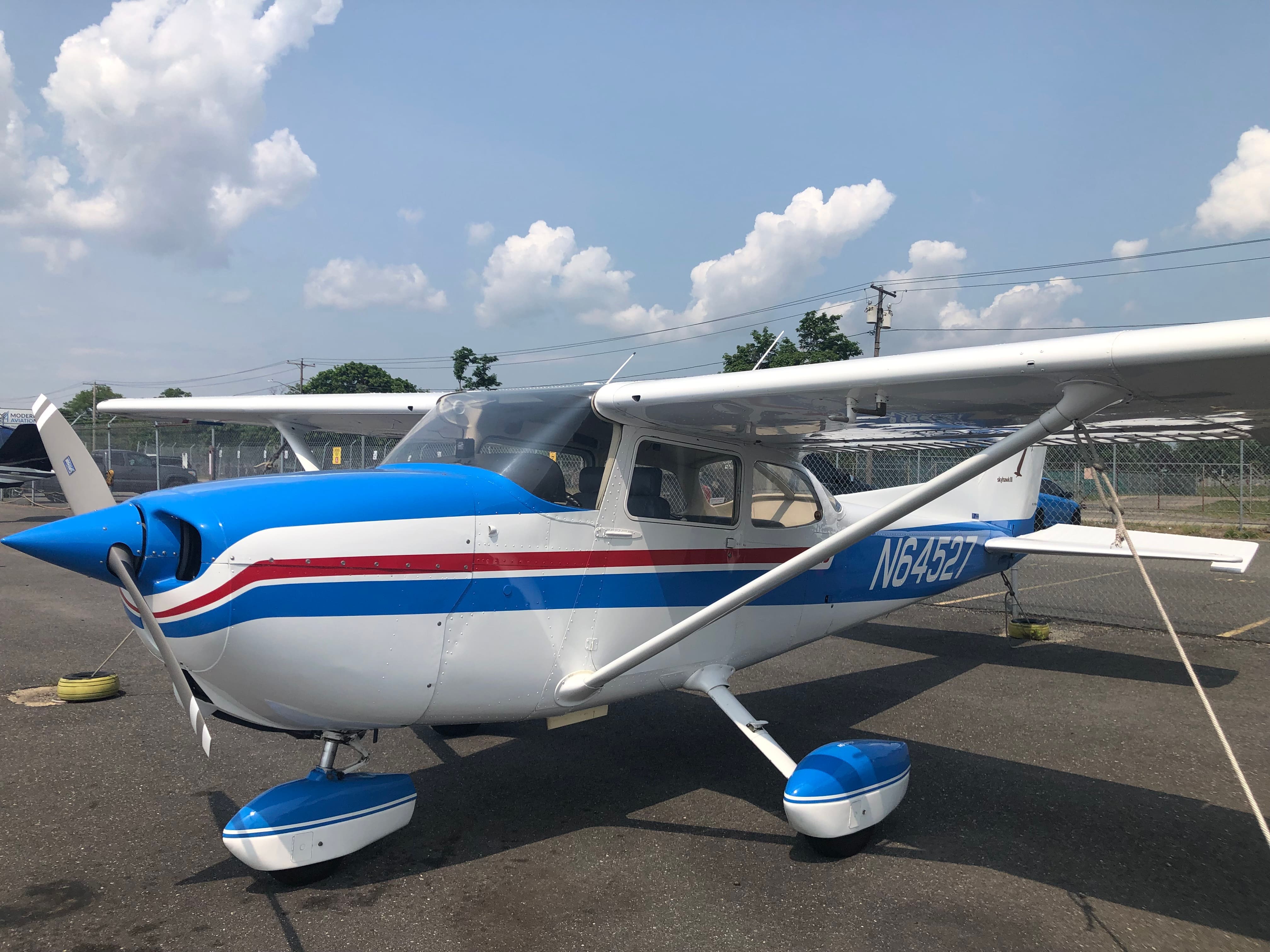
- Aircraft type. The Cessna 172 is the standard trainer for a reason — stable, forgiving, with docile stall characteristics and a wing that has taught half the pilots flying today. Skills from a 172 transfer directly to bigger aircraft. Ask what you will actually fly, and ask about the avionics: a trainer with modern glass or a good GPS navigator will serve you better in the 2026 cockpit environment than a 1970s panel with nothing but steam gauges.
What to avoid
Some warning signs are visible on day one:
- One aircraft, no backup plan. If the entire school's schedule depends on one airplane, your training will stall every time that airplane goes to maintenance. Ask directly what happens when the trainer goes down for its inspection.
- No online scheduling. Calling or texting to book every lesson is a 2005 workflow. A school without transparent, self-serve scheduling is usually hiding thin availability.
- Pressure to pay upfront for everything. Big prepaid packages are a red flag at any flight school. Pay-as-you-go or modest block deposits keep you in control, and they mean the school has to keep earning your business every lesson. If the whole pitch is a discount for a large lump sum up front, walk.
- Guaranteed finish dates and guaranteed hours. Nobody can guarantee either. Your checkride happens when a DPE, an examiner's schedule, and your own proficiency line up — a school that guarantees a certificate in 30 days is telling you what you want to hear.
Why Republic Airport (KFRG)
There is a reason nearly every flight school pin near Farmingdale clusters at KFRG. Republic is a towered airport with Class D airspace and two runways — 1/19 and 14/32 — which gives scheduling flexibility that single-runway fields cannot match when the wind swings around. Tower controllers who work with student traffic every day make your first radio calls far less painful than they would be at a busy Class B satellite field. The practice area is close by, so you are not burning Hobbs time flying twenty minutes each way before the lesson even starts. And KFRG sits about an hour from Manhattan with easy access from both Nassau and Suffolk via the Sagtikos and Southern State Parkways, which is exactly why students from across Long Island — and plenty from Queens and Brooklyn — end up here.
For what it is worth, we have written in more detail about the schools at Republic Airport, including an honest comparison of fleet, pricing, and philosophy — where we win and where we do not. Read the Republic Airport flight schools guide for that breakdown, or start with the discovery flight packages and pricing here.
How to evaluate a school before you commit
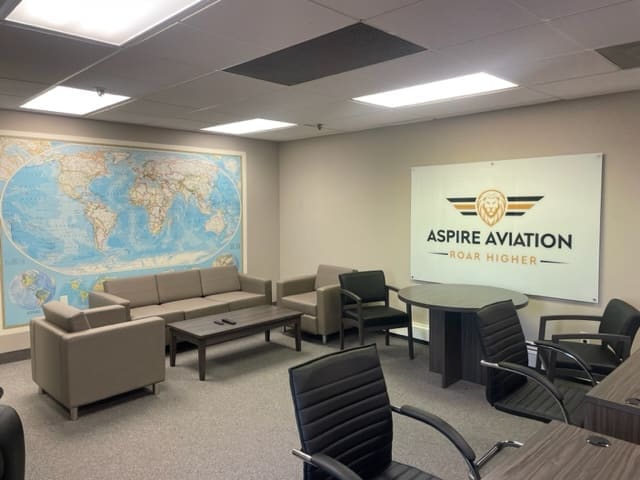
The schools near Farmingdale are happy to have you visit, and you should — more than one of them. On a visit, look past the lobby and ask about the things that actually decide your experience:
- Ask about fleet utilization. How many hours does each aircraft fly per month, and how far out is the schedule booked? Well-utilized but available aircraft means a healthy school. Either extreme is a problem.
- Ask about instructor retention. CFIs leave for the airlines constantly — that is the industry — but a school where nobody stays six months will restart your training over and over.
- Ask about average time to checkride. Not the FAA minimum, the school's actual average. A school that tracks this honestly, and tells you the real number, is a school being straight with you.
- Ask about stage payment and refunds. A clear, written policy on deposits and refunds tells you how the school treats people who leave before finishing — which happens, and is not a failure.
And take a discovery flight before you decide anything. An hour in the air with an instructor tells you more about a school than any website can. It is the cheapest due diligence in aviation.
Where Aspire fits
We are a family-owned Part 61 school at Republic Airport, and we will tell you plainly what that buys you. Part 61 flexibility means your syllabus bends around your life — nights and weekends for working students, weekday blocks if you are training toward a career timeline. We train in a six-aircraft Cessna 172 fleet, so a maintenance day does not pause your training for a week, and several of our trainers carry modern glass panels rather than forty-year-old radios. If you are comparing schools near Farmingdale, come see the difference between a school that schedules around its airplanes and a fleet that schedules around you. For the money side of the decision, our Long Island flight training cost breakdown covers what training here actually runs.
Keep researching: compare Republic Airport flight schools →, read the flight training cost breakdown →, or learn about flight training on Long Island with Aspire →