A discovery flight — sometimes called an introductory flight — is a real flight lesson, not a sightseeing ride. You get a preflight briefing, you go up with a certified flight instructor in a training aircraft, and you handle the controls yourself for most of the flight. If you go on to train, the time logs toward your private pilot certificate. It is the standard first step into aviation for a reason: one flight tells you more about whether this is for you than a hundred articles.
What surprises most people is the price spread. Among the schools at Republic Airport, discovery flights run from $199 to $499 — more than a 2x difference for what sounds like the same product. The differences are real, though, and worth understanding before you book.
What a discovery flight actually includes
A proper discovery flight has three parts, and all three should be in the price:
- The preflight briefing. Your CFI walks you through the aircraft — control surfaces, the instrument panel, what the preflight inspection checks and why. Ten to twenty minutes on the ground that makes the flight itself make sense.
- The flight. Typically 30 to 60 minutes of engine time. You sit in the left seat, taxi with your instructor, and once airborne you take the yoke — climbs, turns, and a look at Long Island from 1,500 to 3,000 feet. Your instructor handles the radio with KFRG Tower and does the landing.
- The postflight debrief. A short conversation about what you did well, what to expect from training, and how the time you just flew counts toward a certificate if you continue.
If a school quotes you a price without the briefing and debrief, or hands you off to a "ride" rather than a lesson, you are not getting a discovery flight — you are getting a tourist flight that logs toward nothing.
What discovery flights cost at Republic Airport
Here are the publicly listed discovery flight prices at KFRG as of 2026, so you can compare directly:
- Skyfarer Academy — $199. The lowest advertised price at the field, from a newer operation.
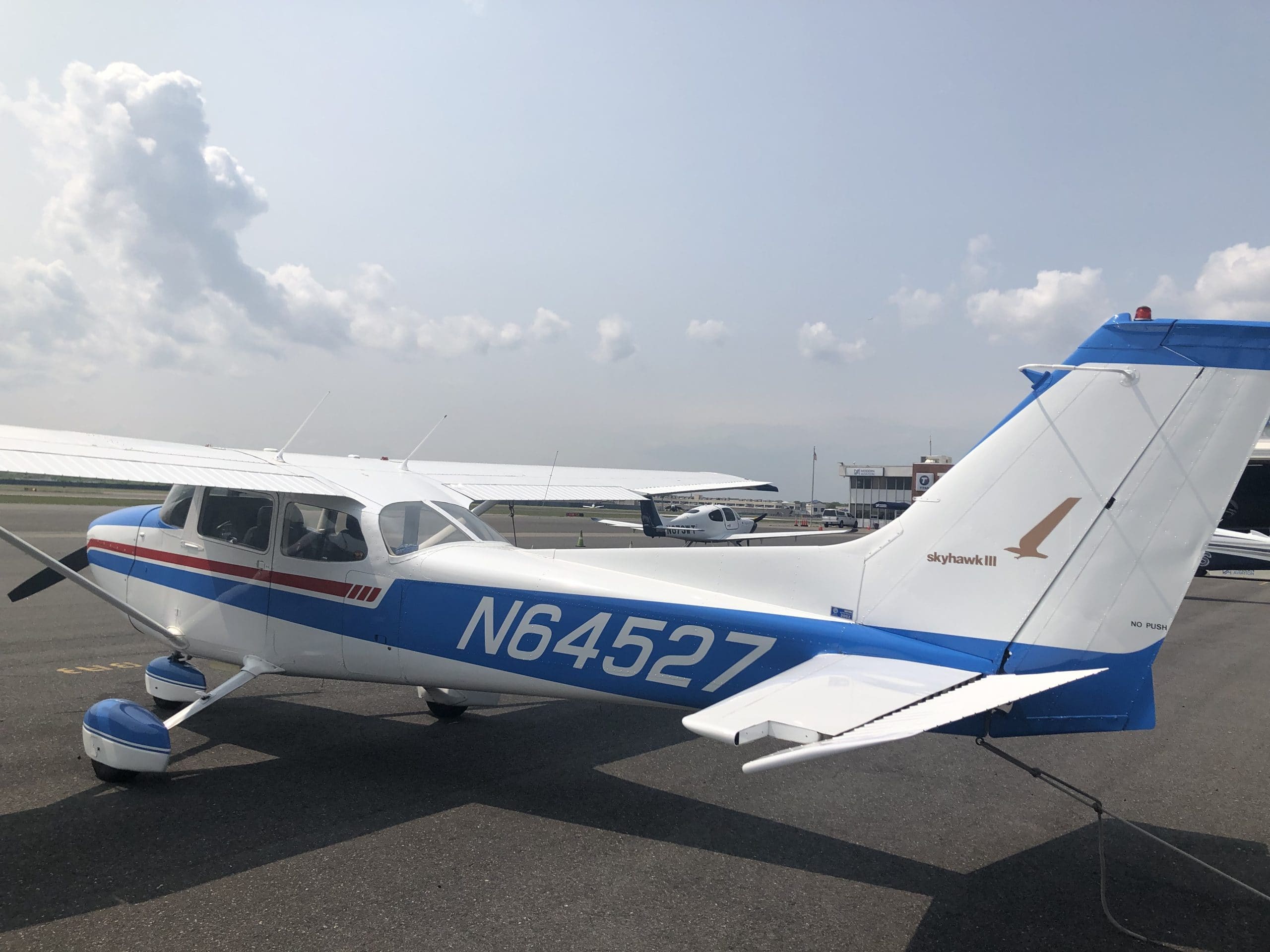
- Aspire Aviation — $250. Ours: a discovery flight in a Cessna 172 from our six-aircraft fleet, with a full preflight briefing, hands-on flight time, and postflight debrief.
- Nassau Flyers — $499. Flown in a Cirrus SR-series aircraft rather than a 172, reflecting the higher hourly cost of the Cirrus platform.
Prices change, and schools run promotions — check current listings before you book. But the structure of the spread is stable, and it comes down to three things: the airplane, the duration, and what the school chooses to include.
Why the price varies that much
The aircraft is the biggest driver. A discovery flight in a Cessna 172 — the aircraft most private pilots train in, at Aspire and around the world — costs meaningfully less than one in a Cirrus SR22 or SR-series aircraft. The Cirrus is a newer, faster, more complex machine with a whole-airplane parachute system and a much higher hourly operating cost, and that cost passes to the student. It is a fine airplane. But for a first flight, the question is whether you enjoy flying — and a 172 answers that question for a fraction of the price.
Flight duration matters. Some schools quote 30 minutes of flight time, others 45 or 60. A 30-minute flight barely gets you out of the pattern and back; an hour gives you time to actually fly the airplane, see the coastline, and settle into it. Compare engine time, not headline price.
What is included varies. Some quotes are aircraft-only with the instructor billed separately; some bundle everything. Some include a logbook entry and ground briefing; some do not. Ask what the total out-the-door price is before comparing.
What to look for beyond price
The cheapest discovery flight is not automatically the best value. A few things matter more than $50 either way:
- Instructor quality. Your first flight should be with an experienced CFI who enjoys teaching first-timers. A rushed instructor on a conveyor belt turns a milestone flight into a transaction. Ask who you will fly with and whether they teach primary students regularly.
- Aircraft condition and avionics. A well-maintained 172 with modern glass — we fly with Dynon SkyView, Avidyne IFD, and Garmin G3X panels across the fleet — is a better first experience and a better preview of your actual training than a tired aircraft with a 40-year-old radio stack.
- Whether the time counts. A legitimate discovery flight with a CFI logs as instruction received and counts toward the 40-hour PPL minimum. Confirm the school will sign your logbook before you pay.
- The airport environment. KFRG is a towered, Class D airport — you will hear real ATC radio work from the left seat, which is exactly the environment you will train in. That is a feature, not a drawback.
- What happens after. A good school treats the discovery flight as the start of a conversation about your goals, not a hard sell. We wrote a full guide to what your first discovery flight is like if you want the play-by-play.
What to expect on the day
Arrive a few minutes early. You will meet your instructor, get the briefing, and walk the aircraft together during the preflight. The flight itself is yours — you will follow the instructor's guidance through climbs and turns, and most first-timers are surprised at how quickly the airplane responds and how natural it starts to feel. Over Long Island, that usually means the shoreline, the barrier beaches, and the Manhattan skyline at a distance. Afterward, the debrief covers what comes next if you want it to. Total time on the ground: about an hour. Total experience: considerably longer in memory.
How to prepare
Almost nothing is required. Bring a government ID, dress for the weather in comfortable clothes, and skip the big meal right before. If you are prone to motion sickness, tell your instructor up front — they will keep the air smoother and it is completely normal on a first flight. Bring a question list; instructors like the curious ones. That is genuinely it.
Where the $250 goes
Ours is not the cheapest discovery flight at KFRG, and we are comfortable with that. The $250 buys a lesson in a well-maintained Cessna 172 from a six-aircraft fleet, with an instructor whose job is to show you what training is actually like, not to close you in a parking lot afterward. The skills you practice in a 172 — yoke and rudder, basic attitude flying, a real radio environment — transfer directly to your private pilot training, because the 172 is the airplane you will train in. If you continue with us, the discovery flight counts toward your certificate from lesson one. You can read more about who we are or browse the discovery flight packages for what is included at each level.
Read what to expect on your first discovery flight →, compare flight schools at Republic Airport →, or browse our training programs →