
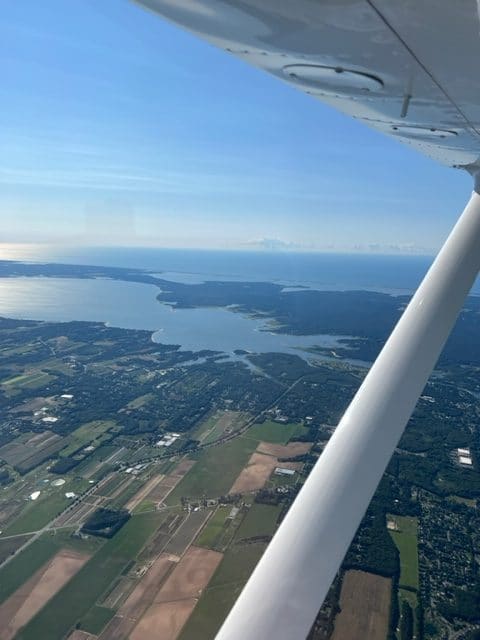
A discovery flight is a real flight lesson with you at the controls, not an aerial tour — and the hour goes better when you show up prepared. The good news is that the preparation list is short. You do not need a headset, a logbook, or any studying. What you need is to dress sensibly, bring almost nothing, and show up with an honest idea of what the next hour looks like. This guide covers it all: the checklist, the flow of the flight, and the questions worth asking while you have a certified flight instructor (CFI) sitting next to you.
What to wear
Dress like you are going for a walk outside, because functionally you are:
- Comfortable, casual clothes. You will climb in and out of the aircraft and spend an hour in a seat with a shoulder harness. Shorts and a t-shirt are fine in summer; jeans are fine any time. Nothing you would be upset about scuffing on a wing.
- Closed-toe, flat shoes. Sneakers are perfect. You will be working the rudder pedals, and sandals, heels, or loose boots make that harder than it needs to be.
- Sunglasses. The glare over Long Island on a clear day is real, and you will be looking outside the whole flight. Polarized lenses can make glass panel displays hard to read, so plain lenses are the better call.
- Layers. A Cessna 172 on the ramp in July is an oven until the door shuts and the air starts moving, and at 2,500 feet on a spring afternoon it can be genuinely cool. A light jacket you can shed in the cockpit is the right answer year-round.
What to bring — and what to leave home
The bring list is short:
- A government photo ID. The school needs to verify identity before you fly — a driver's license is perfect.
- A water bottle. Especially in summer. Small one, and it can wait on the ground if cockpit space is tight.
- Your phone. There will be a moment over the Long Island coast or the NYC skyline where you want a photo. Ask your instructor first — always fine in a stable, non-busy phase of flight, never during the takeoff or landing.
Leave the rest home. Big bags do not fit in a 172 — the baggage compartment behind the rear seats is for luggage, not cockpit access — and loose items in the cabin can slide and interfere with the controls. Anything you do bring can ride in the office or the baggage area. There is nothing else you need: the school provides headsets, and no amount of studying ahead of time changes what the first hour is for.
What to eat beforehand
A light meal an hour or two before the flight is the sweet spot. A heavy lunch sitting in your stomach is the classic recipe for airsickness on a warm day with a bit of turbulence, and flying completely hungry is not kind to your stomach either. Skip anything that does not usually agree with you. If you are prone to motion sickness, mention it to your instructor — they will keep the first flight smooth and gentle, which is what a discovery flight should be anyway.
Weather and cancellations
Sometimes the flight gets called off, and that is the system working. Discovery flights fly under visual flight rules (VFR), which means the instructor needs reasonable visibility and cloud clearance — if the ceiling is low over KFRG or the wind is howling across the runways, the flight does not go, full stop. It is not a judgment about you, and it is not the school being difficult; it is the same weather minimums every VFR pilot at Republic Airport flies by. A school that would send a first-time student up in marginal weather to protect a booking is telling you something important about how it will treat you at 40 hours. If weather cancels your slot, you reschedule — any school around Farmingdale does this constantly, especially in the spring. Book a morning slot if you can; the air is smoother and the afternoons build fewer thunderstorms in summer.
What happens when you arrive
Arrive about fifteen minutes early and check in at the office. From there the hour usually runs like this:
- Meet your instructor. A few minutes of conversation — what you want out of flying, whether this is a bucket-list flight or the first step toward a private pilot license (PPL). It genuinely changes how the lesson runs.
- A short preflight briefing. What the flight will cover, what you will touch, what the instructor handles. Ask everything you want here — there are no stupid questions on a first flight.
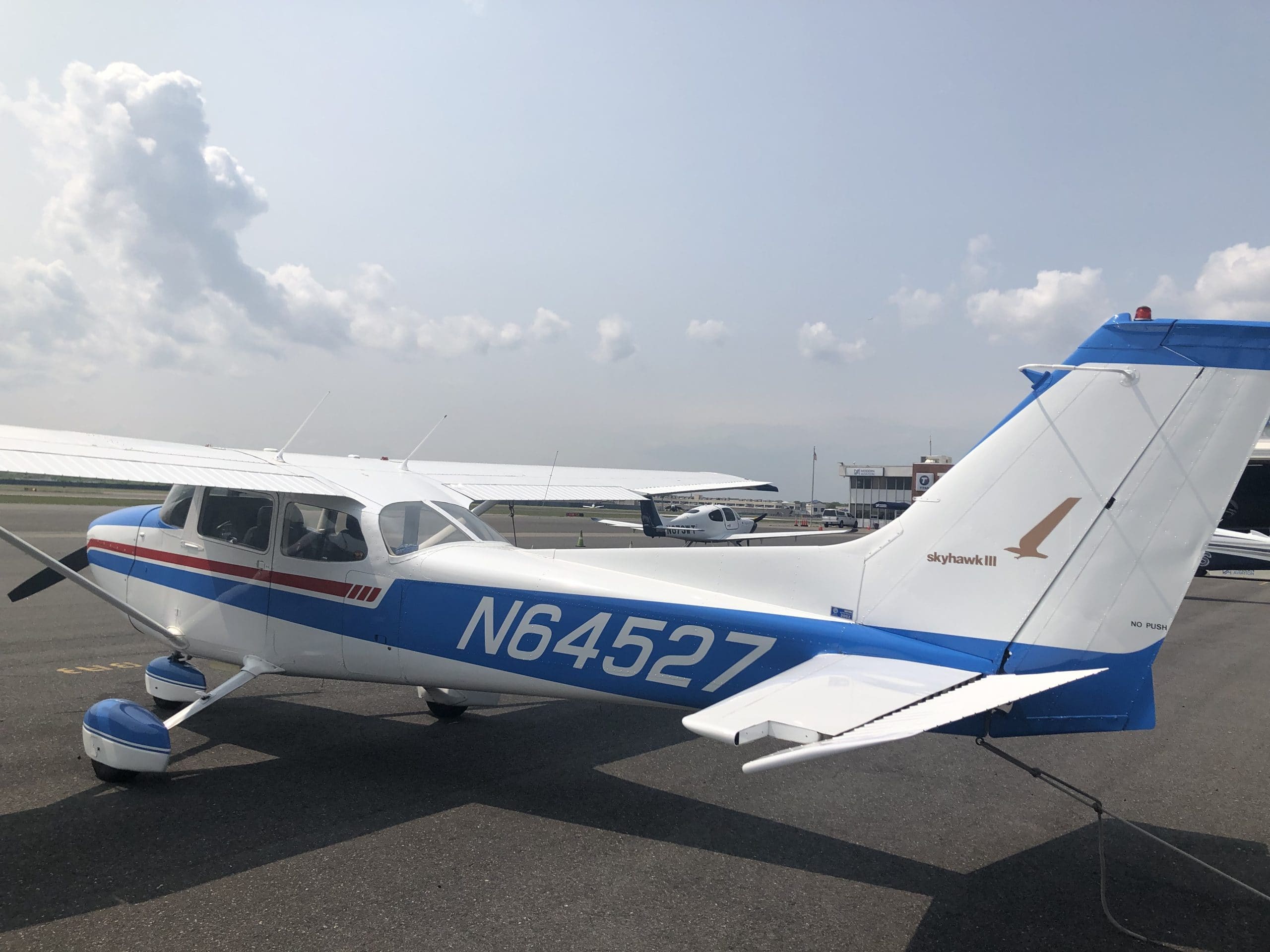
- The walkaround. Your instructor checks the fuel, control surfaces, tires, and surfaces of the Cessna 172 — and will walk you through what they are looking at. This is a real preflight inspection, the same one you will learn to do yourself if you continue.
- Left seat is yours. In a training aircraft the student sits on the left. You are in the pilot's seat from the start.
What you will actually do in the air
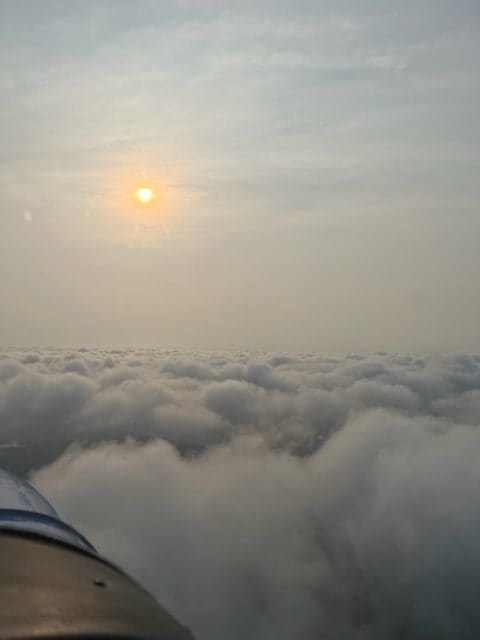
This is not a scenic flight where you hold on — you fly. Once airborne and out over the practice area, your instructor will hand you the controls, and you will do real, gentle flying: holding the aircraft straight and level, making a turn or two, feeling how the yoke and rudder work together. Your instructor handles everything else — the radio calls to Republic Tower, the taxi, the takeoff and landing — so your only job is to look outside and feel what the airplane is doing. You will talk to Manhattan, the Long Island coast, or the south shore beaches depending on the routing. If you are comfortable and curious, most instructors will let you follow them through the takeoff with your hands on the yoke. Nervous is normal for the first five minutes; it fades fast once you are busy actually flying.
One thing worth looking at: the panel
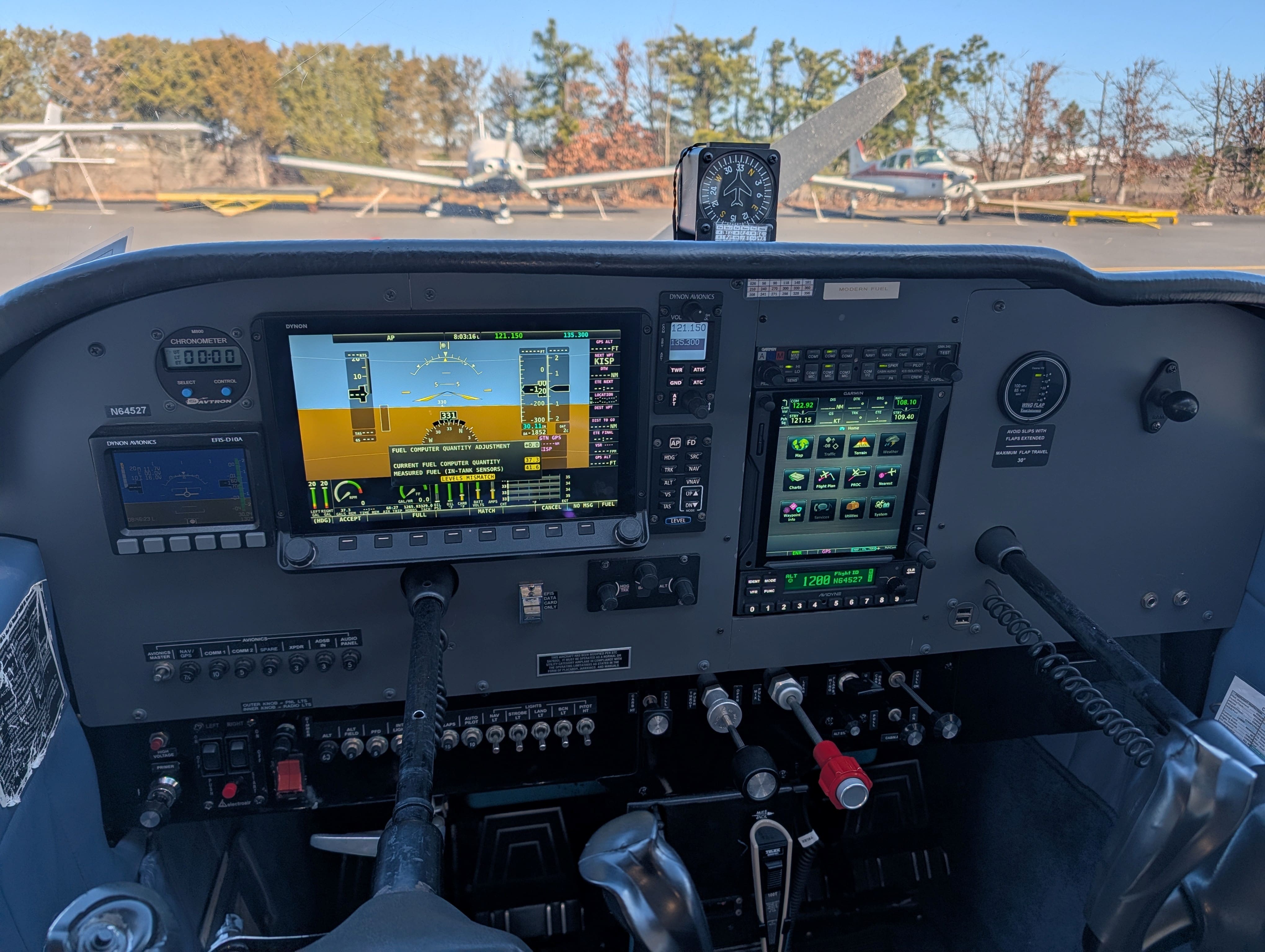
Take a minute on the ground to look at what is in front of you. Depending on which trainer you fly, you might see a traditional six-pack of round instruments, or a modern glass panel. Several of our 172s carry EFIS displays — Dynon SkyView, Avidyne IFD, and Garmin G3X equipment — where one screen replaces the six steam gauges and another handles GPS navigation and the comm radios. You are not expected to know what any of it does on a discovery flight. But it is worth noticing, because if you continue to training, the panel you learn on matters: a modern panel means the GPS-approach and traffic-awareness habits you build in the pattern at KFRG are the ones you will keep for the rest of your flying life.
How to get the most out of it
- Ask questions constantly. You have a professional pilot sitting next to you for an hour with nothing to sell but good instruction. Why is the manifold pressure gauge doing that? Why that runway with this wind? Ask.
- Say if you are nervous. Instructors would much rather know. They will slow the lesson down, keep the air smooth, and skip anything that would rattle you.
- Take the photos — but keep your eyes outside. The view over Long Island is worth a picture. The flying is worth more.
- Ask what happens next, honestly. If you are considering training, this is the hour to ask about scheduling, cost, and how long the PPL realistically takes. A good instructor answers all three without a hard sell.
What happens after
Back on the ramp, you get a short debrief: what you did well, what the aircraft was doing, and — if you want it — a logbook entry. That last part matters more than most people realize. If you bring a logbook (or buy one at the school), your discovery flight can be logged as dual instruction received, and that time counts toward the 40-hour minimum for the private pilot certificate. An hour of your discovery flight is literally your first hour of training. There is zero obligation to continue — plenty of people fly once, love it, and leave it there — but if you do continue, you have already started. If you are curious, the next real steps are on the private pilot program page, and we have written in detail about what to expect on a first discovery flight and what discovery flights cost on Long Island.
Read more before you fly: what to expect on your first discovery flight →, discovery flight costs on Long Island →, or browse the private pilot training program →